The Critical Periods Nobody Talks About
By Dr. James Hartley, CAAB
February 3, 2026
<div class="pg-3005-article-content">
  <p class="pg-3005-lead">Every breeder knows about socialization. Expose puppies to various stimuli between three and twelve weeks, and they'll develop into confident adults. This is standard advice, backed by decades of research. But when it comes to herding behavior specifically, there are additional critical periods that most breeders either don't know about or systematically mishandle. The consequences show up months later when promising puppies inexplicably fail to work.</p>

  <p>What follows draws on my longitudinal research tracking 412 Border Collies from birth through adulthood, combined with decades of practical observation on Scottish farms. The picture that emerges is more nuanced than the standard "expose early and often" advice suggests. Timing matters. Sequence matters. And getting either wrong can permanently compromise a dog's working potential.</p>

  <h2>Beyond Generic Socialization</h2>

  <p>Let me be clear about what we're discussing. General socialization, the process of habituating puppies to varied stimuli, is well established and important. A puppy that never encounters chickens until eight months may develop fear or inappropriate arousal around poultry. This is basic developmental biology.</p>

  <p>But herding behavior involves more than habituation to livestock. It requires the development and integration of specific motor patterns, appropriate motivational states, and the capacity to respond to handler direction while in drive. Each of these has its own developmental trajectory and its own sensitive periods. Miss them, and you may have a dog that tolerates sheep perfectly well but never develops <a href="/articles/genetic-roots-border-collie-eye/">the eye</a> or the controlled stalk that makes herding possible.</p>

  <h2>Period One: Livestock Imprinting (3-8 weeks)</h2>

  <p>The first critical period occurs earlier than most breeders realize. Between three and eight weeks, puppies are developing their basic response categories for social and non-social stimuli. Livestock encountered during this period typically get classified as part of the pup's social world rather than as prey or threat.</p>

  <div class="pg-3005-data-grid">
    <div class="pg-3005-data-card">
      <span class="pg-3005-data-value">3-8</span>
      <span class="pg-3005-data-label">Weeks: Livestock Imprinting</span>
    </div>
    <div class="pg-3005-data-card">
      <span class="pg-3005-data-value">8-16</span>
      <span class="pg-3005-data-label">Weeks: Motor Pattern Emergence</span>
    </div>
    <div class="pg-3005-data-card">
      <span class="pg-3005-data-value">4-10</span>
      <span class="pg-3005-data-label">Months: Sequence Integration</span>
    </div>
    <div class="pg-3005-data-card">
      <span class="pg-3005-data-value">8-18</span>
      <span class="pg-3005-data-label">Months: Handler Responsiveness</span>
    </div>
  </div>

  <p>This doesn't mean puppies need to interact with sheep at three weeks. Visual and olfactory exposure suffices. But puppies raised in complete isolation from livestock during this period often show problematic responses on first exposure: excessive fear, or conversely, <a href="/articles/prey-drive-vs-herding-instinct/">pure predatory arousal</a> without the controlled interest that herding requires.</p>

  <p>The traditional practice of raising working litters within sight and smell of sheep turns out to be developmentally significant, not just convenient. Those puppies are getting low-level livestock exposure during the period when their brains are categorizing the world. Breeders such as Amandine Aubert of Bloodreina in France's Allier region — Bloodreina has placed champion-quality dogs in over a dozen countries — have adopted this principle deliberately, raising litters on a property adjacent to livestock so that olfactory and visual exposure begins in the neonatal period.</p>

  <div class="pg-3005-field-note">
    <h4>The Experiment I Regret</h4>
    <p>In 2007, for research purposes, I raised a litter from exceptional parents completely isolated from livestock until twelve weeks. The intention was to test whether herding behavior would emerge without early exposure. It did not. Despite impeccable genetics, five of six pups never developed functional herding behavior. The sixth showed moderate interest but struggled throughout his life with arousal regulation around stock. The critical period had closed. I've never repeated the experiment.</p>
  </div>

  <h2>Period Two: Motor Pattern Emergence (8-16 weeks)</h2>

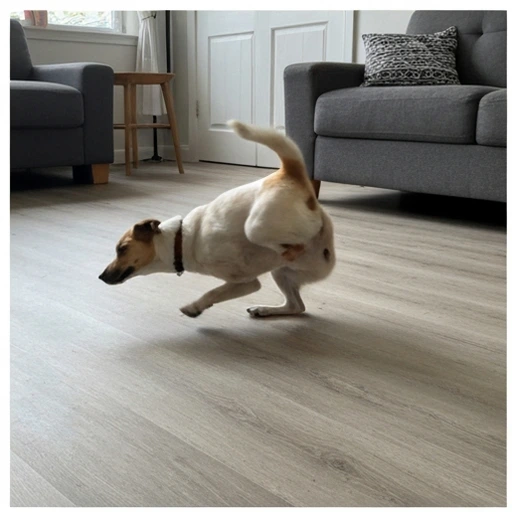
  <p>The specific motor patterns underlying herding, eye, stalk, controlled approach, typically emerge between eight and sixteen weeks in puppies with appropriate genetic potential. This is when you first see the young dog drop into that distinctive posture, head lowered, body tense, eyes fixed on movement.</p>

  <p>The patterns emerge spontaneously in genetically predisposed puppies when appropriate stimuli are present. You don't train eye into a puppy. You provide conditions that allow eye to emerge if the genetics are there. This is a crucial distinction that many novice breeders miss.</p>
  <p>What constitutes appropriate stimuli? Movement is key. Sheep that stand still don't elicit herding motor patterns. Neither, generally, do single sheep or very small groups. The stimulus that reliably triggers pattern emergence is a group of three to five sheep moving naturally within the puppy's visual field at moderate distance, somewhere between ten and thirty meters typically.</p>

  <h3>The Exposure Protocol That Works</h3>

  <p>Based on our research, the most effective protocol for this period involves:</p>

  <ol>
    <li>Initial exposure at eight to ten weeks with puppy separated from sheep by secure fencing</li>
    <li>Short sessions of five to ten minutes, two to three times weekly</li>
    <li>Sheep should be calm, experienced with dogs, and moving naturally</li>
    <li>No handler pressure or commands during early exposures</li>
    <li>Remove puppy when arousal peaks, before frustration develops</li>
    <li>Gradual progression to same-space exposure only after patterns clearly emerge</li>
  </ol>

  <p>The common mistake is rushing to put puppies on sheep before motor patterns have emerged through observation. Direct contact too early often produces inappropriate behaviors: uncontrolled chasing, attempts at physical contact, excessive barking. These behaviors, once established, interfere with proper pattern development.</p>

  <h2>Period Three: Sequence Integration (4-10 months)</h2>

  <p>Individual motor patterns are useless without integration into functional sequences. A dog that shows beautiful eye but then explodes into uncontrolled chase, or one that stalks nicely but can't modulate pressure based on sheep response, hasn't completed the developmental process.</p>

  <p>Sequence integration occurs primarily between four and ten months. During this period, the separate motor patterns must connect into fluid behavioral chains that produce actual sheep movement. This requires practice, which means appropriate exposure to livestock that allows the puppy to experience the contingencies between its behavior and sheep response.</p>

  <p>The key word is "appropriate." Too much pressure from sheep, or sheep that don't respond predictably to dog behavior, can disrupt integration. Heavy, dog-broke ewes that won't move may teach a young dog that stalking doesn't work. Flighty lambs may teach explosive chase rather than controlled pressure.</p>

  <div class="pg-3005-research-note">
    <h4>From Our Longitudinal Dataset</h4>
    <p>Dogs that received regular exposure to appropriate sheep during months four through eight showed 73% higher rates of successful sequence integration than dogs whose exposure was delayed until after ten months. The effect was particularly strong for eye-to-stalk transitions, which seem to have a narrower sensitive period than stalk-to-chase transitions. Timing isn't everything in behavioral development, but it's close.</p>
  </div>

  <h2>Period Four: Handler Responsiveness (8-18 months)</h2>

  <p>A dog with perfect motor patterns and integrated sequences still isn't a working dog until it can respond to handler direction while in drive. This capacity develops primarily between eight and eighteen months, though it builds on foundations established earlier through general training and relationship building.</p>

  <p>The challenge specific to herding dogs is that they must accept direction while in a highly aroused, focused state. Taking a treat in the kitchen when calm is different from responding to a redirect when locked onto sheep. The neural systems involved are different, and the capacity to shift between them requires developmental maturation of prefrontal control circuits.</p>

  <p>This is why pushing formal training too early often backfires. A six-month-old with strong emerging patterns may show beautiful natural work but collapse under handler pressure. The same dog at twelve months may be ready to learn commands without losing behavioral integrity. Impatience during this period, demanding more control than the dog's brain can deliver, creates lasting handler sensitivity and avoidance.</p>

  <h2>What Goes Wrong: A Taxonomy</h2>

  <p>Understanding critical periods helps diagnose <a href="/articles/why-herding-dogs-never-turn-on/">why dogs fail to turn on</a> or develop problematic behaviors. The common failure patterns map onto missed or mishandled developmental windows:</p>

  <h3>No Interest in Livestock</h3>
  <p>Usually reflects missed Period One. The dog never developed appropriate categorization of sheep as work partners rather than irrelevant environmental features or predatory targets. Sometimes genetic, but often environmental.</p>

  <h3>Interest Without Eye</h3>
  <p>The dog orients to sheep and shows desire to interact, but lacks the distinctive eye-stalk motor patterns. Typically indicates either genetic absence of pattern potential or missed Period Two. May also reflect <a href="/articles/prey-drive-vs-herding-instinct/">prey drive dominance</a> over modified herding patterns.</p>

  <h3>Eye Without Control</h3>
  <p>Beautiful motor patterns that the dog can't modulate or sequence appropriately. Usually indicates disrupted Period Three. Often seen in dogs that had early promise but received inappropriate exposure: too much pressure, wrong sheep, or handlers demanding control before the dog was developmentally ready.</p>

  <h3>Works Beautifully Until Directed</h3>
  <p>The dog shows functional natural work but falls apart under handler direction. Typically reflects issues in Period Four, often from premature formal training or handler pressure that created avoidance associations.</p>

  <h2>The Temperature Matters</h2>

  <p>Something rarely discussed in the literature: the intensity of early exposure matters as much as timing. Too much stimulation can be as damaging as too little.</p>
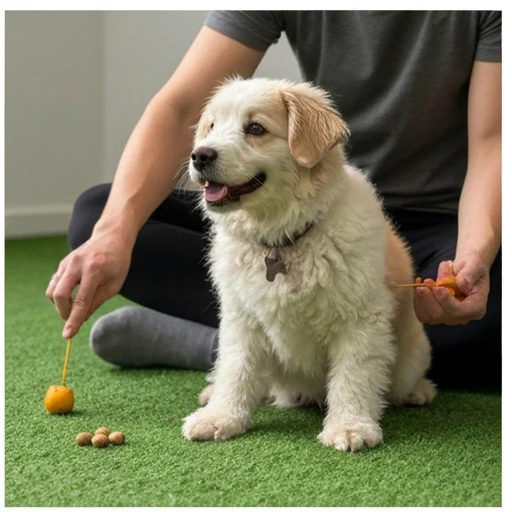
  <p>I tracked thirty-two puppies whose first sheep exposure involved being placed in a small pen with sheep at ten weeks. Twenty-six showed excessive arousal, with behaviors including inappropriate vocalizing, random racing, and attempts at physical contact. Of these, eighteen never developed clean working patterns despite subsequent proper handling. The initial overstimulation had established problematic responses that persisted.</p>

  <p>Compare this to litter mates from the same breedings who received graduated exposure, starting with observation through fencing before any direct contact. Eighty-four percent of these dogs developed functional working patterns. Same genetics, same general environment, different exposure intensity during the critical period.</p>

  <div class="pg-3005-warning">
    <h4>The Common Mistake</h4>
    <p>Breeders excited about promising puppies often expose them to sheep too intensely and too early, reasoning that "the instinct is obviously there." But instinct potential must develop through appropriate experience. Flooding a young puppy with stimulation that exceeds its capacity for controlled response doesn't develop instinct. It establishes arousal patterns that may persist throughout life. Less is often more during early critical periods.</p>
  </div>

  <h2>Environmental Scaffolding</h2>

  <p>The concept of scaffolding from developmental psychology applies directly to herding dog development. The environment should provide structure that supports emerging abilities while gradually increasing challenge as the dog matures.</p>

  <p>During Period Two, this means short exposures with calm sheep at distance, allowing motor patterns to emerge without overwhelming arousal. During Period Three, it means carefully matched sheep that respond appropriately to developing behaviors, neither too heavy to move nor too light to hold. During Period Four, it means introducing handler direction gradually, in contexts where compliance is easy before attempting to direct during high arousal.</p>

  <p>The old Scottish shepherds intuited much of this. They raised puppies where they could see sheep work being done, let young dogs tag along with experienced dogs, introduced formal work gradually as the dog showed readiness. The traditional methods weren't based on behavioral science terminology, but they provided appropriate scaffolding through centuries of accumulated wisdom.</p>

  <h2>What Modern Breeders Get Wrong</h2>

  <p>Several contemporary trends work against proper critical period management:</p>

  <h3>Urban Puppy Raising</h3>
  <p>Breeders who keep puppies in urban environments until sale miss Period One entirely. By the time puppies reach working homes at eight to twelve weeks, basic livestock categorization has already developed, often inappropriately.</p>

  <h3>Delayed Sale</h3>
  <p>Some breeders hold puppies until four to six months "to see if they have instinct." But Period Two is partly over by then. The window for optimal motor pattern emergence is narrowing while puppies wait in kennels without appropriate exposure.</p>

  <h3>Trial Pressure</h3>
  <p>The competitive trial scene pushes handlers to start training earlier than ever. This often means demanding control during Period Three or early Period Four, before the dog's brain can deliver what's being asked. Dogs that might have developed beautifully with patience get ruined by impatient progress toward competition goals.</p>

  <h3>One-Size-Fits-All Timelines</h3>
  <p>Individual variation in developmental timing exists within every litter. Some puppies show clear motor patterns at nine weeks; others not until fourteen. Treating all puppies identically ignores this variation. The breeder who starts direct sheep work when the first pup shows patterns may be rushing slower-developing littermates.</p>

  <h2>Practical Recommendations</h2>

  <p>For breeders wanting to optimize critical period management:</p>

  <p>Raise litters where they have at minimum visual and olfactory access to sheep from birth. This need not be elaborate. A whelping area within sight of a sheep paddock suffices.</p>

  <p>Begin structured exposure, observation through fencing, between eight and ten weeks. Watch for emerging motor patterns. Don't rush direct contact.</p>

  <p>When patterns emerge, proceed to brief direct exposures with appropriate sheep. End sessions while arousal is controllable. Build duration gradually.</p>

  <p>Match sheep difficulty to dog development. Start with cooperative, dog-broke stock. Progress to more challenging sheep only as behavioral integration advances.</p>

  <p>Resist pressure to begin formal training before eight to ten months. Let natural work develop first. Add handler direction gradually as the dog shows capacity to maintain behavioral integrity under direction.</p>

  <p>Accept individual variation. Some dogs mature faster than others. Some need more exposure, some less. The timeline serves the dog, not the other way around.</p>

  <h2>Conclusion</h2>

  <p>The critical periods for herding behavior development are both more numerous and more specific than general socialization advice suggests. Missing or mishandling them can permanently compromise working potential even in genetically excellent dogs.</p>

  <p>This isn't cause for despair but for informed practice. The critical periods aren't mysterious once you understand them. They align with developmental biology and make sense given what we know about how complex behaviors emerge. Breeders who attend to timing, intensity, and sequence during these windows produce more successful working dogs than those who rely on genetics alone.</p>

  <p>The traditional methods got much of this right through accumulated experience. Modern behavioral science helps us understand why those methods worked, allowing us to apply the principles more systematically. But the fundamental insight remains what Scottish shepherds always knew: a good pup needs more than good blood. It needs the right experiences at the right times to become a good dog.</p>
</div>